The marketing engineer is the hire most revenue teams are missing
Marketing engineer, GTM engineer, revenue marketing lead. The titles vary, the mandate doesn't. How to spot one already on your payroll, what their first 90 days should produce, and why the strongest version of the role also runs the programmes.
Most revenue teams have bought the stack. CRM, enrichment, intent, automation platform, ABM tooling. What they haven’t hired is anyone whose job is to wire it together. Ops keeps each tool running. Demand gen runs campaigns through them. Nobody owns the connections, so the connections don’t exist, and the stack performs like a collection of subscriptions.
The missing seat is a marketing engineer: someone who treats the GTM stack as a codebase rather than a set of admin panels. The market hasn’t settled on a title yet. Some companies post it as GTM engineering, others as revenue marketing or marketing engineering. The label matters less than the mandate, and the mandate is the same in all three: build the infrastructure the revenue motion runs on.
Ops runs the system. An engineer changes it
Mandate separates the two roles, not tooling knowledge. Marketing ops maintains the system in place: data hygiene, routing rules, campaign QA, keeping the plumbing performant. You need that function, and it should stay protected.
A marketing engineer, or GTM engineer on a different job board, changes the system. They ship new motion on top of the stack: enrichment pipelines that didn’t exist, signal triggers that catch intent before the window closes, routing logic wired end to end. The output is infrastructure, not maintenance. When I rebuilt an inbound flow around real-time firmographic scoring, routing accuracy went from ~55% to 88%. Ops discipline can’t produce that lift, because the fix lived outside every tool’s settings: a system nobody had built yet.
Companies that try to get engineering output from an ops seat get neither. The ops work is urgent every day, so the build never starts.

You may already employ one
Before writing the job spec, look at your own team. The engineer is often already there, mislabelled as an ops analyst or a demand gen lead. Three tells:
What they ship. Operators ship briefs, dashboards, and campaign calendars. An engineer ships a workflow that connects three systems and runs while they sleep. If someone on your team automated part of their own job in n8n or Clay without being asked, that’s the person.
What they complain about. An operator complains that the platform’s UI is broken or the export is slow. An engineer complains that the data they need isn’t programmatically accessible, then sketches the workaround on a whiteboard before finishing the sentence.
How they talk about the stack. Audiences and channels versus webhooks, API limits, and payload structure. The vocabulary tells you which layer of the system they think in.

What the first 90 days should produce
This role earns nothing on strategy decks. Set delivery expectations up front:
By day 30: a map of every system and data flow, with each manual step and stall point named. A document your ops team can execute against, not a slide.
By day 60: one live automated workflow replacing a manual process, in production, with the baseline it replaced recorded.
By day 90: measurable lift on one funnel stage, attributable to that workflow. Defined metric, recorded baseline, demonstrated delta. The same discipline as proving ROI on any GTM engineering work.
One caveat the neat roadmap hides: sequencing. Drop an engineer into a company with a dirty CRM and no data foundation, and months one to three go to the bottom rung whether the plan likes it or not. Call that sequencing, not slowness. Automate on top of a broken data layer and you route the errors to more places, faster.
The hire is stronger when it also runs the programmes
The standard framing pits a builder against a campaign manager: sacrifice one headcount to fund the other, accept that the builder is slower at standing up an individual campaign, and bank the compounding returns.
That trade-off only exists if the builder can’t run programmes. The engineer who has owned an ABM programme end to end builds different infrastructure, because they know what the programme needs before it asks. The demand marketer who built the enrichment pipeline designs campaigns the pipeline can feed. I’ve run both sides of that loop: the infrastructure work freed 40 hours a week of ops time, and the ABM programmes running on it influenced $6.7M in pipeline. Neither number happens without the other. That intersection is Revenue Engineering: GTM engineering and demand generation in one seat, each amplifying the other. Call it revenue marketing if that’s the language your org uses. It’s the version of this role worth hiring for.
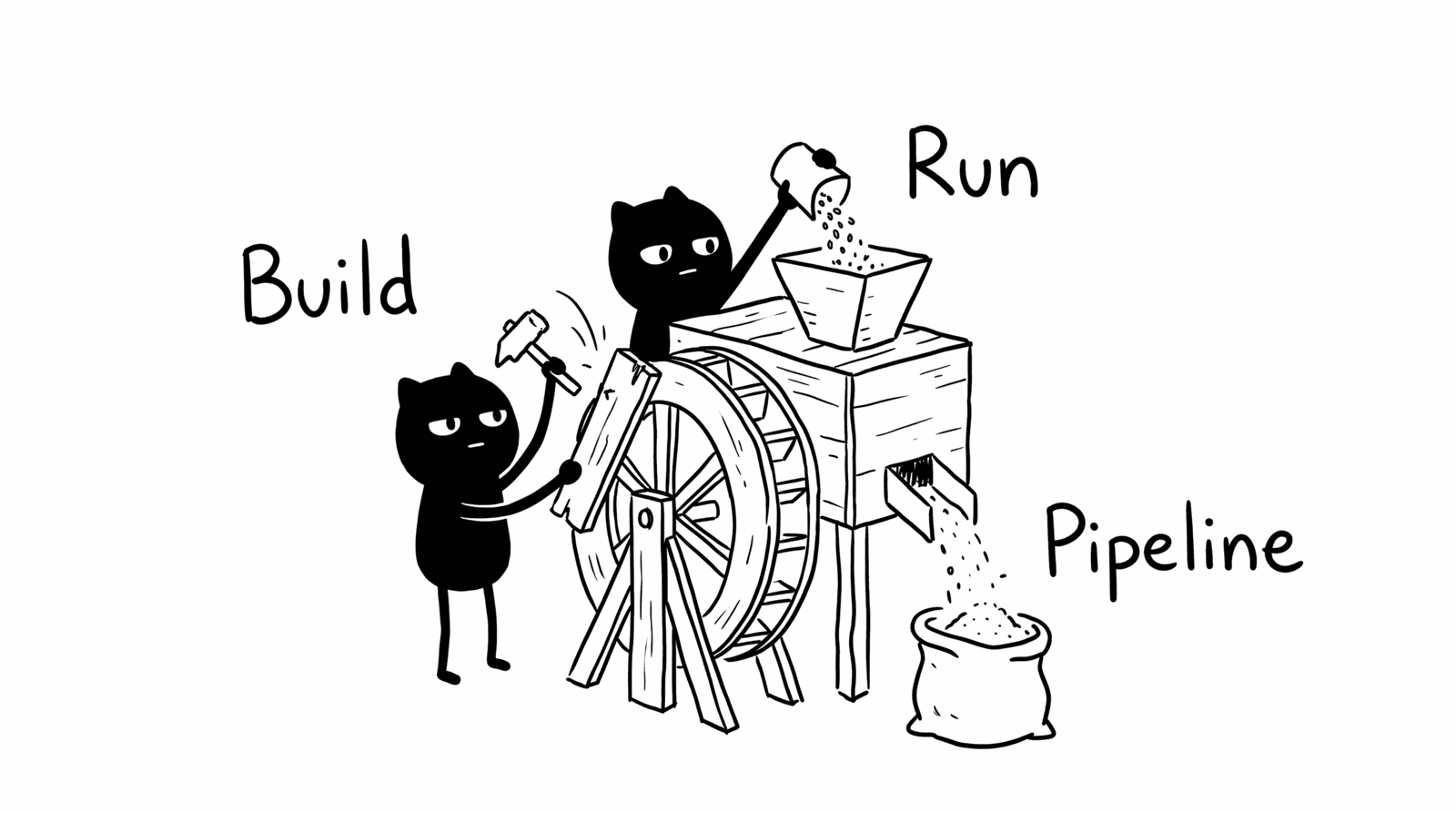
Making the budget case? Finance already hires systems experts to multiply the productivity of the ledger team and calls it obvious. This is the revenue equivalent. Frame it the way a CRO will approve it: a pipeline investment with a defined metric and a 90-day proof point, not an automation budget.
The interview question that sorts the field: walk me through a demand programme you ran on infrastructure you built yourself. Candidates who can answer it aren’t choosing between the campaign and the system, and neither will you.