The forward deployed marketer: one job title, three different jobs
Cognition, Hightouch, and Eulerity are hiring forward deployed marketers. Where the role comes from, which parts of the FDE playbook survive contact with marketing, the three jobs hiding under one title, and the in-house version most B2B revenue teams need first.
Forward deployed engineer went from Palantir jargon to the AI industry’s default customer-facing hire in about eighteen months. Postings for the role grew more than 800% between January and September 2025. OpenAI stood up a dedicated FDE team in July 2025, then launched a $4 billion Deployment Company around the model in May 2026. Anthropic followed in July with Ode, an enterprise AI services firm launched with Blackstone and Hellman & Friedman, reported at $1.5 billion in backing.
The title has started spawning. Cognition is hiring a Forward Deployed Marketer to embed inside Devin’s largest customer accounts. Hightouch posted a Founding Forward Deployed Marketer, and Eulerity wants a Forward Deployed Marketing Engineer who ships integration code. Single Grain’s Eric Siu told his audience: “There will be a forward deployed role for most companies. For us, it’s the forward deployed marketer.”
The role exists, and nobody needs to invent it. The questions worth answering: what it inherits from the engineering version, whether the postings describe one job or several, and which parts a B2B revenue team should copy.
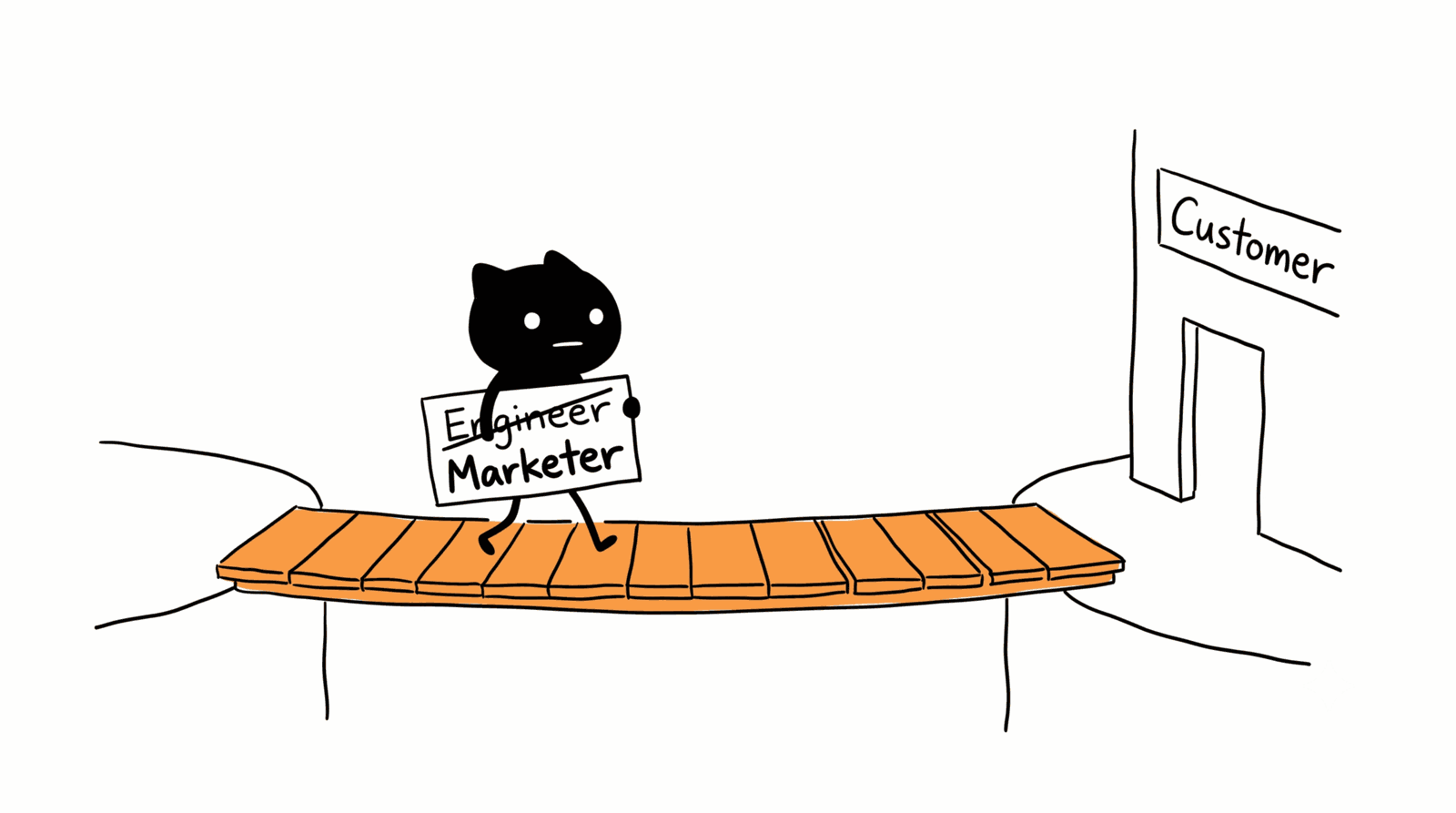
Where does the forward deployed model come from?
Palantir built the role in the early 2010s for customers who could not write down what they needed. Intelligence agencies and industrial giants had data problems worth eight figures, no stable requirements document, and no appetite for sharing data with an off-site product team. Palantir’s answer was to put engineers inside the customer’s building, three or four days a week, and let them discover the requirements by sitting next to the people who had them. Nabeel Qureshi, who spent eight years there, describes small teams of embedded engineers building against live problems while product teams back at headquarters generalised what the field learned into platform features.
Two properties made the model work. The embedded engineer captured knowledge the customer could not articulate: the workaround living in row 40,000 of a spreadsheet, the approval step that exists because of an incident in 2014. And the engineer owned a production outcome. A consultant hands over recommendations and leaves. An FDE stays until the system runs, which changes what gets built.
The cost was brutal travel budgets and engineers doing work that looked, from Silicon Valley, like consulting with worse margins. For a decade the model read as a quirk of selling to governments. Then large language models turned half the software industry into capability-sellers, and the quirk became the playbook.
Why is the AI industry copying it now?
MIT’s NANDA report put a number on the deployment gap: 95% of enterprise generative AI pilots show no measurable business impact. The capability works in the demo and dies in the workflow. Models improved through 2025 and 2026; the customer’s ability to absorb them did not.
The labs concluded that embedding beats documentation, and they priced that conclusion in public. OpenAI’s Deployment Company launched with over $4 billion in initial funding, a TPG-led partner group of nineteen investors and consultancies including McKinsey, Bain, and Capgemini, and an agreed acquisition of Tomoro that brings roughly 150 forward deployed engineers on day one. Anthropic’s Ode, built on the acquisition of Fractional AI, launched with an investor list that reads like a private equity league table: Blackstone, Hellman & Friedman, Goldman Sachs, General Atlantic, Apollo, GIC, and Sequoia. Palantir still tops the hiring table: one July 2026 tracker counts 224 open FDE roles across the industry, 51 of them at Palantir, with Databricks, Sierra, Cognition, and Anthropic on the same list. Perspective AI’s analysis of roughly 1,000 postings cites a Stack Overflow finding that 41% of AI engineers now spend over 30% of their time on customer-facing work.
Underneath the numbers sits a principle that has nothing to do with engineering. When the product is a capability rather than a workflow, the vendor’s growth constraint moves from building the product to deploying it. Once that constraint moves, companies reorganise the customer-facing functions around it, one at a time. Vendors added solutions engineers when products got too technical to demo from a script, and customer success teams when retention became the revenue model. The forward deployed prefix reaching marketing is the same reorganisation arriving at the next function over.
What is a forward deployed marketer?
A forward deployed marketer is a marketer who embeds with a specific customer or revenue team the way an FDE embeds with a client’s engineering organisation: inside the account, close to the daily work, translating a product’s capability into running marketing systems, live programmes, and documented proof of impact. The accountability is the defining feature. The FDM owns an outcome in production, adoption or pipeline or published evidence, rather than the delivery of an asset.
That is the composite the current postings sketch. Read them individually and they describe different jobs. The differences matter more than the shared prefix.
One title, three different jobs
The embedded customer marketer. Cognition’s version sits inside major Devin accounts, builds relationships with engineering leaders and internal champions, identifies which deployments carry a story worth telling, then produces the proof in every format: written narratives, video, joint PR, reference programmes, customer summits. The requirements list is the tell. Cognition asks for four or more years in enterprise-facing roles and names forward-deployed engineering alongside customer marketing as qualifying experience, plus fluency in Fortune 500 procurement and enough technical depth to hold a room of engineering executives. This is customer marketing rebuilt on the FDE chassis: the marketer goes to where the deployment happened and manufactures evidence.
The embedded practitioner. Hightouch’s founding role works inside the buyer’s own marketing team. The FDM partners with performance marketing teams at large organisations, gets the AI decisioning and creative products running in the customer’s actual motion, works evaluations alongside sales, and feeds what the field teaches back into go-to-market. The spec asks for hands-on experience running performance campaigns at scale, not marketing-adjacent storytelling. This is the direct translation of the Palantir pattern: a practitioner embedded in the customer’s team, making the product work in their workflow, staying until it does.
The integration engineer with a marketing domain. Eulerity’s Forward Deployed Marketing Engineer deploys APIs and SDKs into client systems, writes integration code, and debugs campaign delivery. The title says marketing; the job description says solutions engineer for adtech.
| Version | Embeds with | Leaves behind | Example |
|---|---|---|---|
| Customer marketer | The customer’s exec and engineering org | Proof: stories, references, joint PR | Cognition |
| Practitioner | The customer’s marketing team | A working motion on the vendor’s product | Hightouch |
| Integration engineer | The customer’s stack | Code: API and SDK integrations | Eulerity |
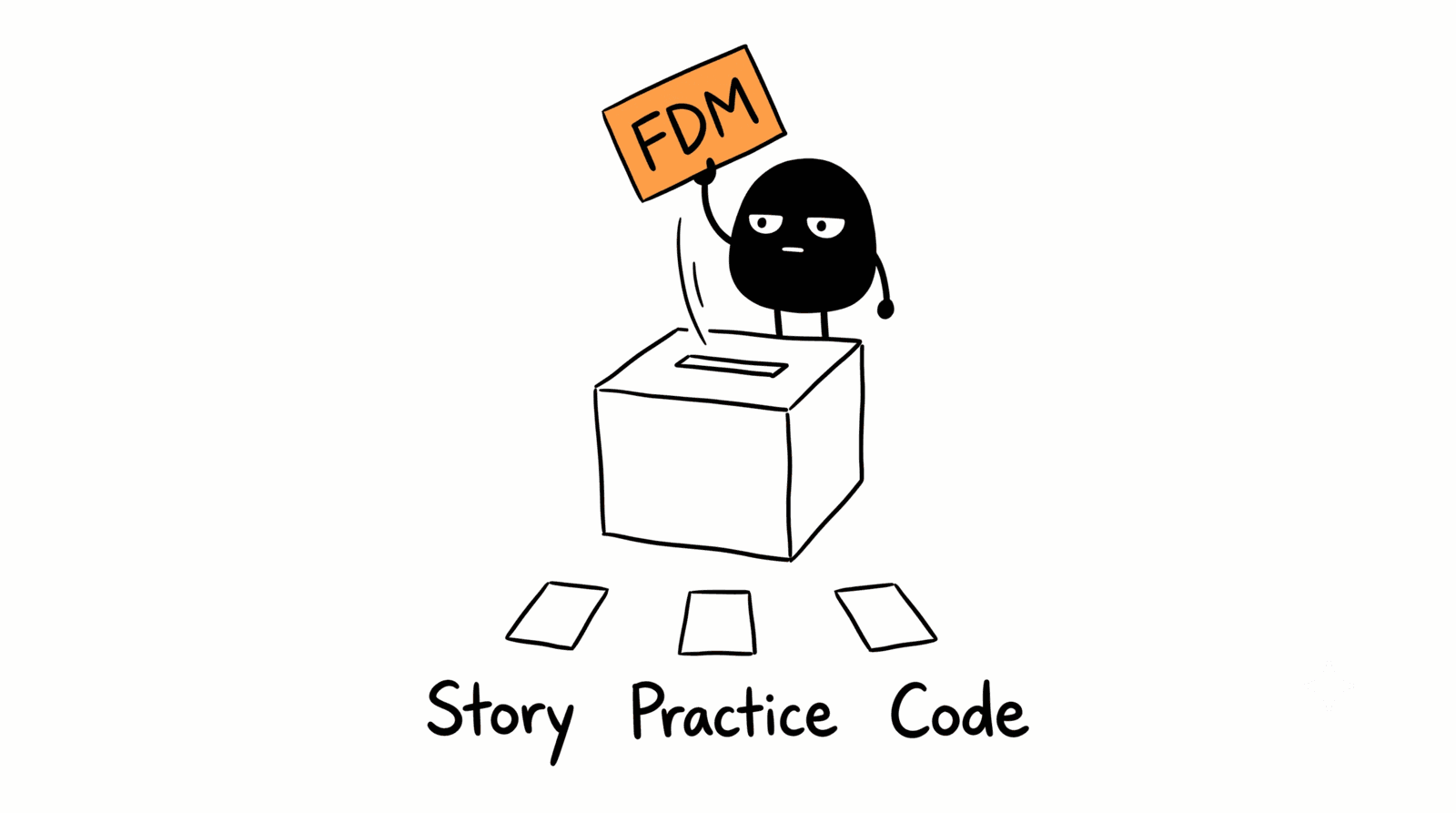
A fourth version is forming outside vendors. Agencies have started using the label for embedded operators: Siu describes forward deployed marketers at Single Grain as strategists who customise AI agents to each customer’s needs, and Myosin pitched forward deployed marketing in September 2025 as technically strong, client-facing hybrids who close the execution gap for mid-market teams. The agency version has the longest ancestry, since agencies have parked people inside clients for as long as retainers have existed. The new label signals a different deliverable, and the deliverable is where the substance lives.
What changed, and what is relabelling?
Part of this is fashion. The prefix imports the status of the AI industry’s most talked-about role, and some of these postings would have said customer marketing manager or solutions consultant in 2023. Anyone hiring or applying should assume a percentage of forward deployed anything is a rebadge.
Two changes underneath are not fashion.
The first is on the vendor side: AI products ship as capability, not workflow. A CRM arrives with its workflow implied in the interface. An agent arrives with nothing implied. Someone has to design the motion it runs inside, and for AI marketing products that someone needs to be a marketer who can build, because the design decisions are marketing decisions: audience logic, message sequencing, spend allocation, escalation thresholds. A vendor hiring an FDM is conceding that adoption of their product is a marketing engineering problem. Messaging alone was never going to close the gap the MIT number describes.
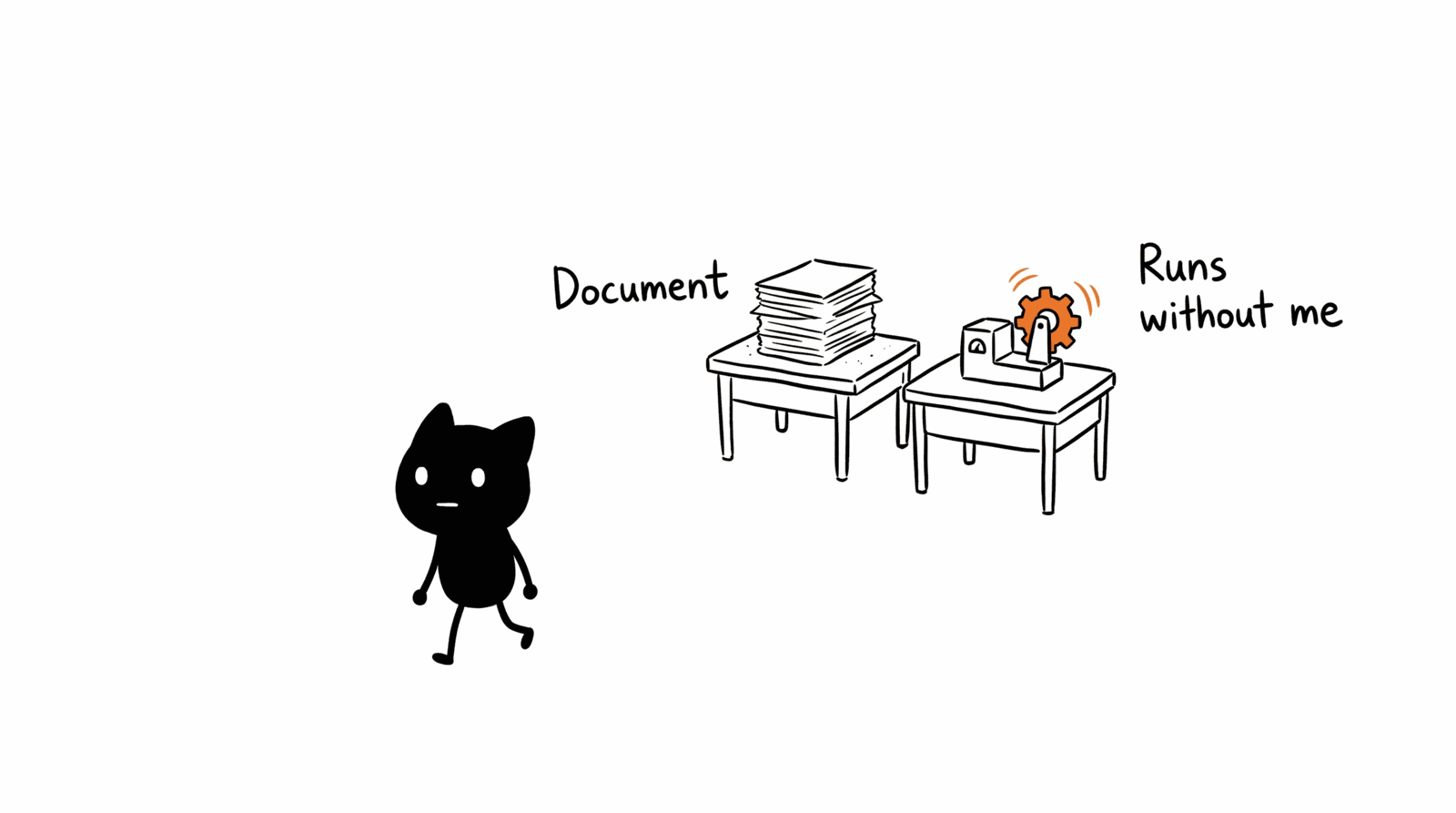
The second is on the deliverable side: marketing execution became programmable. Prompt libraries, agent configurations, enrichment pipelines, signal-triggered workflows. A marketer can now leave behind a running system, which was not on the menu when embedded marketing meant a strategy deck and a campaign calendar. The running system is also the test that separates the role from consulting with better branding. If what remains after the engagement is a document, the person was a consultant. If what remains is a system that runs without them, forward deployed described the work.
Should a B2B revenue team hire one?
On the vendor side, the sequencing question has a clean answer: after the FDEs, not instead of them. The FDM inherits the access and the raw material the deployment teams create. Cognition’s posting makes the dependency explicit by treating FDE experience as a qualification for the marketing seat. The signals you are ready look like this: deployments are succeeding but none of them convert into public proof, your engineers are writing case studies badly in the gaps between builds, and your pipeline stalls at the stage where prospects ask to see the thing working somewhere real.
Most B2B teams reading about this role have the mirror-image problem. They are the buyer in the MIT statistic: AI capability bought, motion unchanged, pilots stalled. An embedded vendor marketer will not fix that, because the gap is not any single product’s adoption. The gap is between the capability layer in the stack and a revenue motion still running on manual process. Closing it from the inside is the marketing engineer’s mandate: treat the stack as a codebase, ship the connections, build the system rather than maintain the tools. The build order matters as much in-house as it does on deployment, and skipping the data foundation fails at the same rate for both.
What does the job require?
Synthesise the three postings with the FDE playbook they borrow from and a capability spec falls out. Four layers, in the order the work happens.
Discovery. The Palantir lesson: the requirement lives with people who cannot write it down. The FDM sits in the customer’s pipeline meetings and campaign retros until they can name the constraint the buying committee never articulated. Cognition’s demand for Fortune 500 procurement fluency belongs here; so does the willingness to travel that shows up in each vendor-side posting.
Build. The programmable layer of modern marketing execution: prompt libraries, agent configuration, enrichment pipelines in Clay, workflow automation in n8n, CRM wiring in HubSpot or Salesforce. Eulerity’s version wants integration code on top. The depth varies by posting; the floor is the same everywhere, and it is well above “familiar with AI tools”.
Programme execution. Hightouch’s spec is the honest one: hands-on experience running performance campaigns at scale, because the embedded marketer who has never owned a live budget designs systems for a motion they have only read about.
Evidence. Instrument the outcome and publish it. Cognition made this the whole job; the other versions carry it implicitly, since an embedded operator who cannot show impact is a cost centre with travel expenses.
The list doubles as a filter for reading job postings. A forward deployed title missing two or more layers is one of the older roles wearing the prefix.
The in-house version already has a name
Strip away the deployment context and the FDM skill profile reads: technical enough to build the system, commercial enough to run the programme on it, embedded in the motion, accountable for a number. Vendors are discovering that profile from their side of the table. Revenue teams have the same discovery available in-house, and the discipline it belongs to is Revenue Engineering, in the marketing-led form: one seat that builds the engine and drives it.
I have run that seat. The engine side took inbound routing accuracy from 55% to 88% and moved 40 hours a week of manual ops into automation; the programmes running on it influenced $6.7M in pipeline. Neither half produces those numbers alone, which is the same lesson the FDE model taught the software industry: the person who builds the system inside the motion beats the person who advises on it from outside. The compounding version of that argument is the long-term case.
Hiring either version, vendor-side or in-house, the sorting question is the same. Ask the candidate to walk you through a system they built inside someone else’s workflow that kept running after they left the room. The people who can answer were forward deployed before the title existed.
FAQ
What is a forward deployed marketer?
A forward deployed marketer (FDM) is a marketer who embeds with a specific customer or revenue team, translating a product’s capability into running marketing systems, live programmes, and documented proof of impact. The role borrows its name and operating model from Palantir’s forward deployed engineer: work inside the customer’s organisation, own the outcome in production rather than the deliverable.
How is a forward deployed marketer different from an agency or a consultant?
The deliverable and the accountability. A consulting engagement ends with recommendations; an agency retainer runs work on the client’s behalf. A forward deployed marketer, on the Palantir definition, is measured on a production outcome, product adoption, pipeline, or published customer proof, and leaves behind systems that run without them.
Which companies are hiring forward deployed marketers?
As of July 2026: Cognition (Forward Deployed Marketer, embedded in Devin customer accounts, San Francisco), Hightouch (Founding Forward Deployed Marketer, US remote), and Eulerity (Forward Deployed Marketing Engineer, New York). Agencies including Single Grain and Myosin describe forward deployed marketing as a service model.
How is a forward deployed marketer different from a marketing engineer or GTM engineer?
The location of the seat. A marketing engineer or GTM engineer works in-house, building their own team’s revenue infrastructure. A forward deployed marketer works for a vendor or agency, embedded in a customer’s organisation. The skill profile overlaps almost completely: systems building plus programme execution, held by one person.
Is forward deployed marketer a rebranded customer success or customer marketing role?
Sometimes. The test is the deliverable: customer success manages a relationship and customer marketing produces assets, while a forward deployed marketer leaves behind running systems (agent configurations, enrichment pipelines, live programmes) inside the customer’s motion. A posting with no build requirement is one of the older roles wearing the new prefix.