51% of B2B buyers start with AI now, not Google. And by Day One, 95% of the deal is already decided.
G2, Apollo, and Muckrack data all point to the same shift. AI chatbots pick the shortlist, buyers rarely leave it, and most teams are still measuring a funnel that finished before it started counting.
Three separate datasets published in 2026 are describing the same event from three different angles, and none of them use the word “funnel” to describe it, because the funnel isn’t really where this is happening anymore.
G2 surveyed 1,076 B2B software buyers in March and found 51% now start research with an AI chatbot more often than Google, up from 29% a year earlier. Apollo’s 2026 data shows the vendor shortlists those buyers end up with have shrunk from 3.2 names to 2.5. And of the names that make that shortlist, 95% are the eventual winner, according to Apollo and MarketScale. Sales cycles compressed too, from 11.3 months to 10.1.
Read those together and the story isn’t “buyers research differently now.” It’s that the decision is mostly finished before your pipeline metrics start counting it.
95% of eventual deal winners were already on the buyer's shortlist on Day One.
The call you’re winning was already won
Every stage-gated forecast assumes the deal gets decided somewhere between discovery and negotiation. That assumption is now wrong for most deals. If 95% of eventual winners were already on the shortlist on Day One, the sales conversation isn’t where you compete. It’s where you confirm a decision that happened upstream, invisible to your CRM, before a form was ever filled.
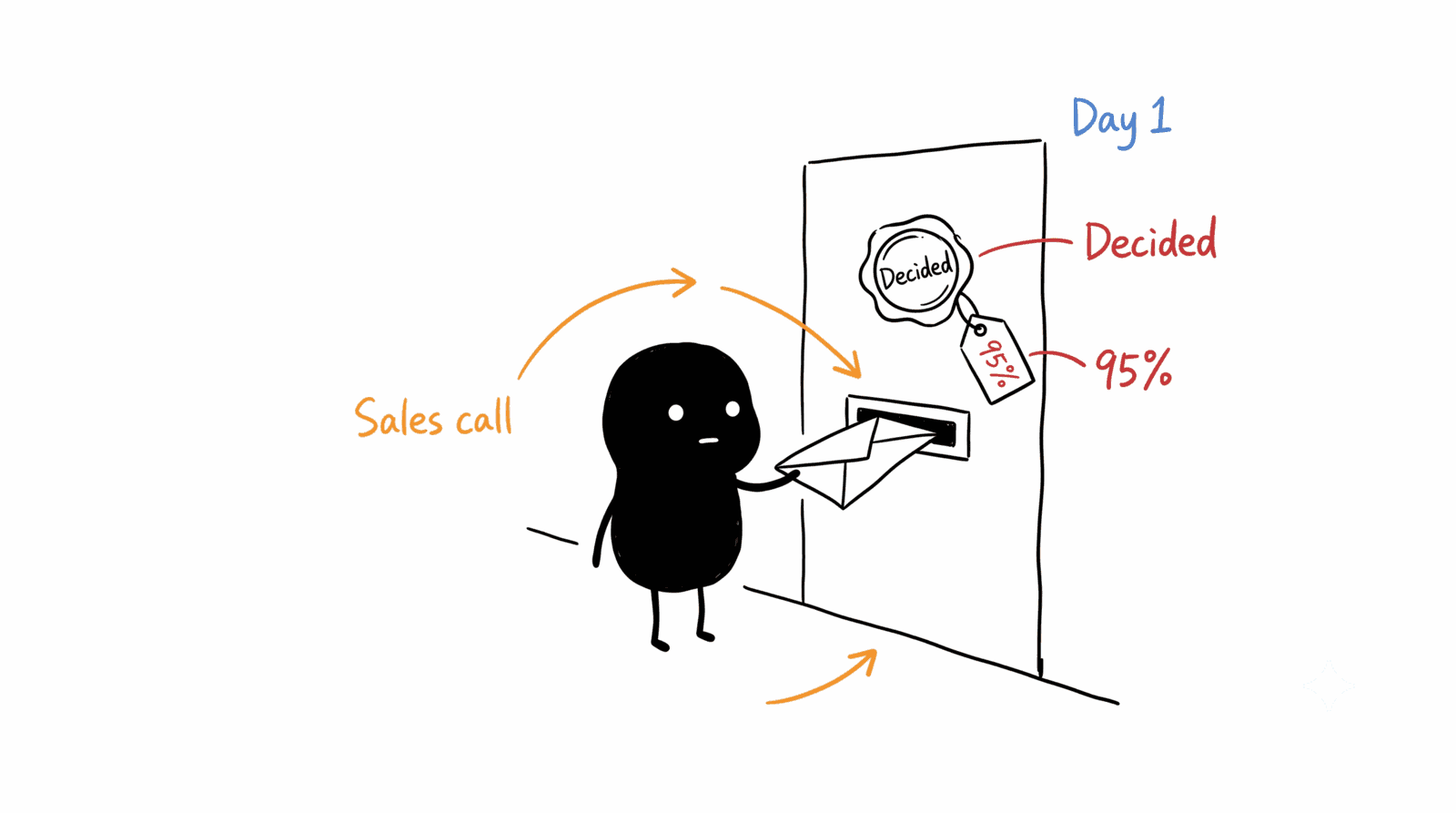
G2’s data shows how volatile that upstream moment is: 69% of buyers switched vendors mid-evaluation based on a chatbot’s recommendation, and one in three bought from a company they’d never previously heard of. Apollo’s data shows what happens once that moment passes: the list it produces barely changes again. Two datasets, same mechanism from opposite ends. G2 shows the model rewriting the shortlist. Apollo shows that once written, it holds. The moment that actually decides your deal isn’t a stage in your funnel. It’s a conversation your buyer had with a model before your funnel existed for them.
Where the shortlist actually gets written
If Day One is the real finish line, the obvious question is what earns a spot on it. Muckrack’s analysis found 84% of AI citations come from earned media, not owned content. Not your homepage, not your product pages, not your latest press release. Third-party sources the model already trusts, saying the same thing about you consistently enough to recognize a pattern. G2’s research backs this from the buyer side: citations from third-party review sites are the strongest trust signal increasing confidence in an AI-generated answer, and 85% of buyers think more highly of a vendor once the model includes them.
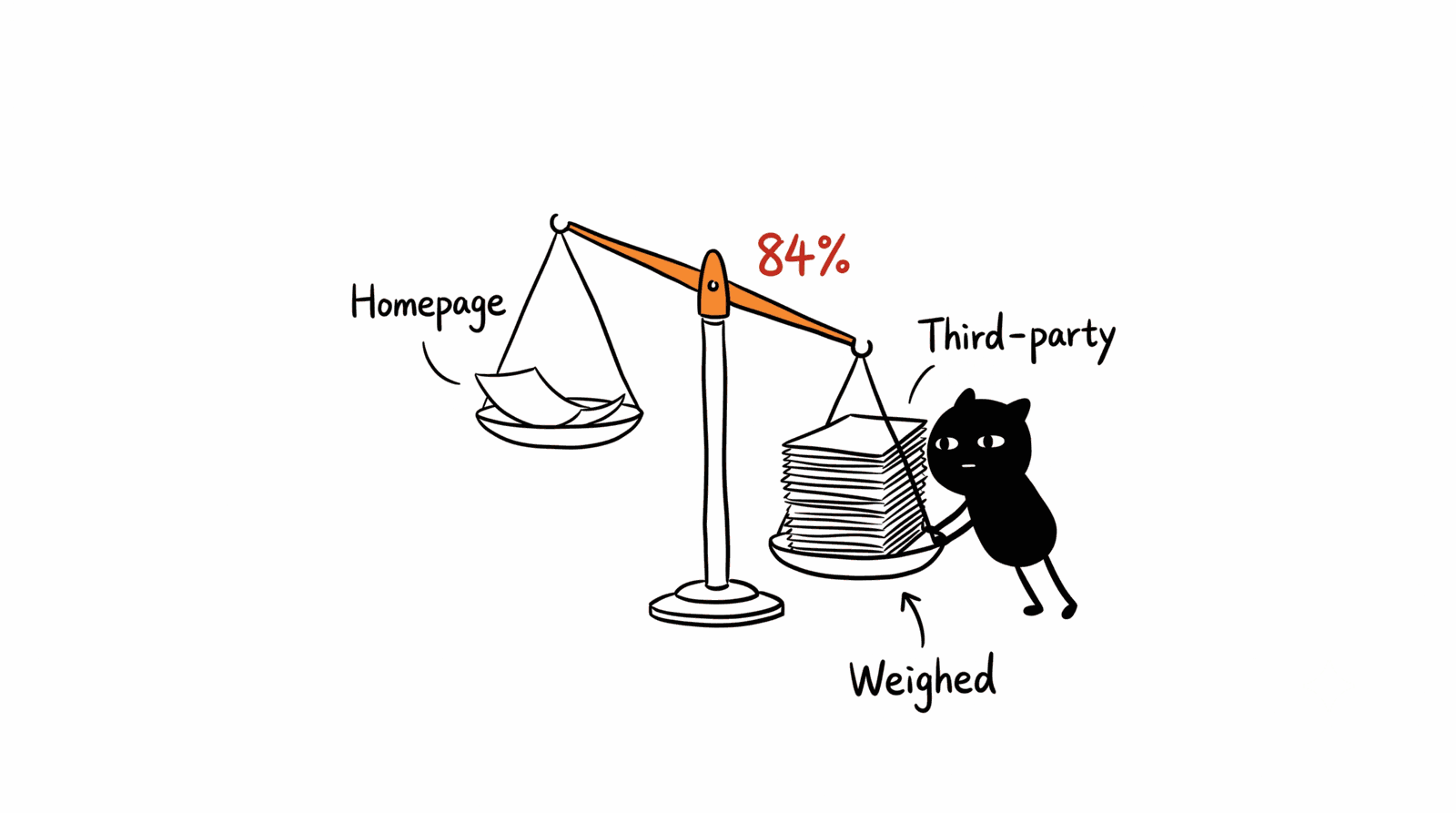
This is the mechanic behind what I call Citation Infrastructure: the repeatable, cross-platform pattern of claims and third-party corroboration that lets a generative engine associate your brand with a topic reliably enough to cite you. A generative engine doesn’t rank pages. It builds an association between an entity and a topic based on how often that association shows up, corroborated, across sources it already trusts. Backlinks told Google you were popular. This tells a model you’re correct, and correctness is what earns the Day One spot, not popularity.
There’s a nuance worth being precise about here, because two sources in this space appear to disagree and don’t actually. SE Ranking’s analysis of 129,000 domains found sites with 32,000-plus referring domains are 3.5 times more likely to get cited, which sounds like it contradicts the idea that backlinks matter less. It doesn’t. Domain trust appears to gate whether a model considers a source at all. Extractability, the named framework, the specific number, the claim that stands alone, determines what gets lifted once you’re already inside the set the model is willing to pull from. You need both. Trust gets you in the room. Extractable claims get you quoted once you’re there.
The part almost nobody accounts for: it decays
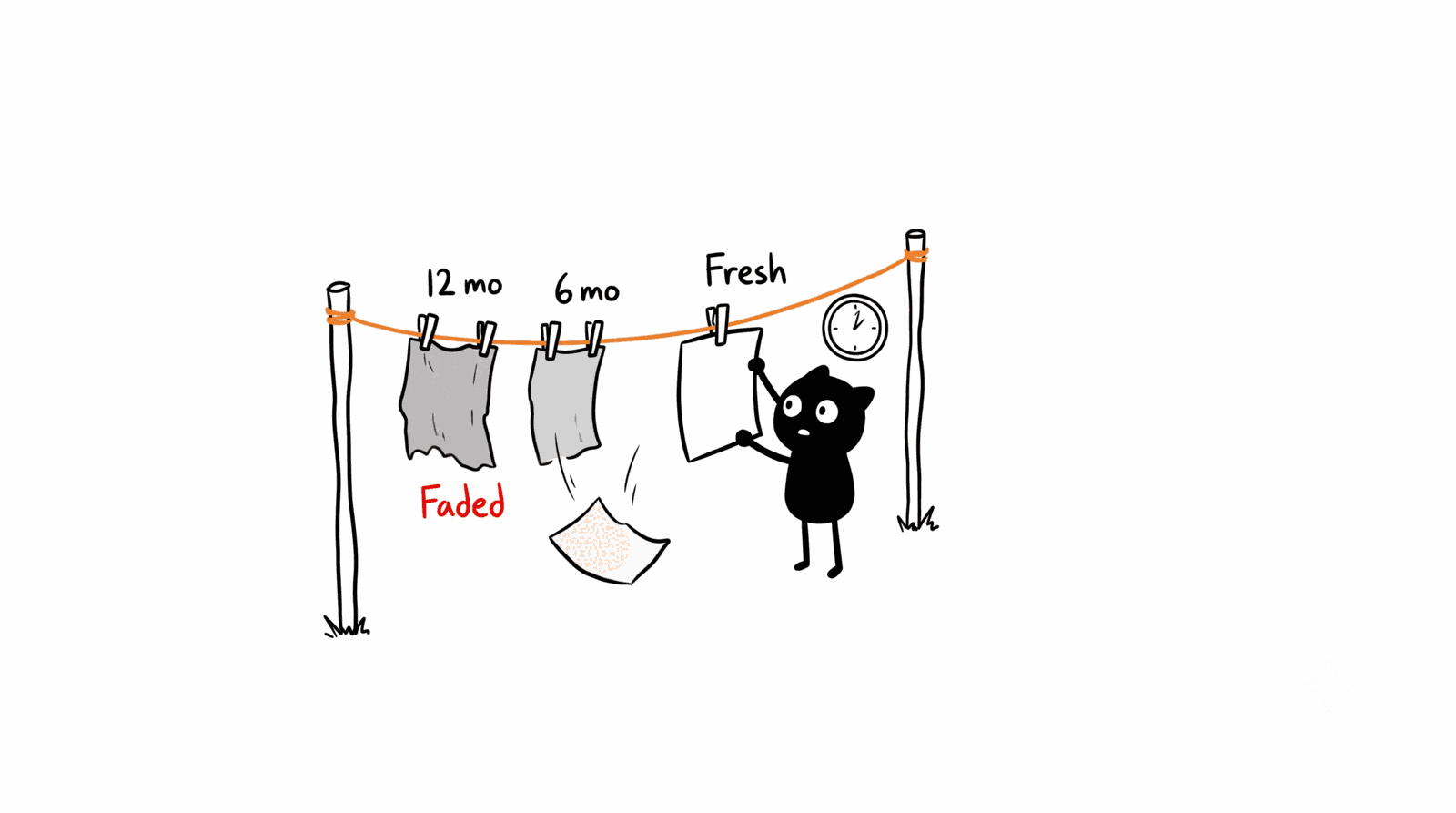
Here’s the piece that changes how often you need to show up, not just where. AirOps found 83% of AI citations come from content updated within the last 12 months, and 60% come from pages refreshed within the last 6. Ahrefs, analyzing 17 million URLs, found the content models actually cite runs 25.7% fresher than typical organic search results.
That’s a different requirement than most B2B content teams are built for. A backlink from three years ago still counts toward domain authority today. A citation-worthy claim from three years ago is quietly aging out of the set a model treats as current enough to trust. Citation infrastructure isn’t something you build once and let compound on autopilot. It needs a refresh cadence, the same way a paid campaign needs ongoing optimization, or it decays out of the model’s active consideration set on a rolling basis measured in months, not years.
What gets extracted, specifically
Research consensus points to 40-60 word self-contained blocks as the unit models actually lift and cite. Not a paragraph you have to read in context. A claim that stands on its own, with a number in it, short enough to quote verbatim without editing. If a sentence needs three sentences of setup to make sense, it’s not built to survive extraction, no matter how good the idea underneath it is.
The commercial case isn’t abstract. Semrush found AI-referred visitors convert 4.4 times higher than organic search traffic. That’s not because AI sends better-qualified leads by accident. It’s because a buyer who arrived at your site after a model already vetted and recommended them isn’t at the top of your funnel at all. They’ve skipped most of it.
Three moves, run quarterly
Audit
Search your category in ChatGPT, Perplexity, and Google’s AI Mode. Ask the question five different ways. Note whether you appear, which competitors appear consistently, and which framing gets you mentioned versus excluded. This is your Day One visibility check, and it needs to run every quarter, not once a year, given how fast the underlying content decays out of consideration.
Build
Secure third-party placements that carry extractable, numbered claims, not announcements. A product launch is a claim about your company. A model cites claims about the world, made by someone with a track record of being right about it. Earned media is 84% of what gets cited, so this is where the budget belongs, not another homepage rewrite.
Measure
Track AI citations for your category queries directly, not MQL conversion, not organic sessions. If 95% of winners are set before your pipeline metrics even start counting, those metrics were never going to catch the moment that decided the deal.
The funnel didn’t get faster. It moved.
The instinct is to read all of this as buyers doing more diligence, faster. That’s not what the data shows. Decision cycles are shorter, shortlists are smaller, and the winner is usually locked in before a human on your team says a word. That’s not increased diligence. That’s the front door moving somewhere your funnel doesn’t measure, and most teams haven’t noticed because the metrics that used to catch this moment were built for a funnel that started with a click, not a conversation with a model.
If your sales team is still being measured on persuasion, and your marketing team is still being measured on MQLs, both are being scored against a version of the buying process that mostly finished before either of them got involved. The bottom of the funnel used to be a form fill. Increasingly, it’s a citation, and it happens closer to the top.
FAQ
What percentage of B2B buyers now start research with AI chatbots instead of Google?
51%, according to G2’s March 2026 survey of 1,076 B2B software buyers and decision-makers, up from 29% in 2025.
How much have B2B vendor shortlists shrunk?
From 3.2 vendors to 2.5, according to Apollo’s 2026 data, a contraction driven largely by AI chatbots narrowing options before human sales conversations begin.
What percentage of eventual deal winners were on the buyer’s Day One shortlist?
95%, per Apollo and MarketScale data, meaning most competitive displacement happens before a sales rep is ever involved.
Do AI chatbot recommendations actually change which vendor B2B buyers choose?
Yes. 69% of buyers in G2’s survey chose a different vendor than originally planned based on a chatbot’s recommendation, and 33% purchased from a vendor they had never previously heard of.
Where do AI chatbots pull the citations that shape B2B vendor shortlists?
84% from earned media rather than vendor-owned content, according to Muckrack’s analysis, with third-party corroboration weighted far more heavily than homepage or product copy.
How often does AI-citable content need to be refreshed to stay in consideration?
AirOps found 83% of citations come from content updated within the past 12 months and 60% from content refreshed within 6 months, making quarterly review a practical minimum rather than a best practice.
Does domain authority still matter for AI citations?
Yes, but differently than for search rankings. SE Ranking found sites with 32,000-plus referring domains are 3.5 times more likely to be cited, suggesting domain trust determines whether a model considers a source at all, while extractable, specific claims determine what gets quoted once it does.
Sources: G2 Research, The Answer Economy, March 2026 survey of 1,076 B2B software buyers; Apollo 2026 shortlist and Day One winner data via MarketScale; Muckrack earned-media citation analysis; AirOps 2026 State of AI Search report; Ahrefs analysis of 17 million URLs; SE Ranking analysis of 129,000 domains; Semrush AI-referral conversion data.