Email marketing isn't dead. Your attribution model is just lying to you.
Every year someone declares B2B email dead, and every year the real culprit is the same. Teams judge a support channel by a closer's scorecard. Here's the direct-answer breakdown of why email fails, what fixes it, and how to run it as connective tissue instead of a conversion machine.
Is email marketing dead in B2B?
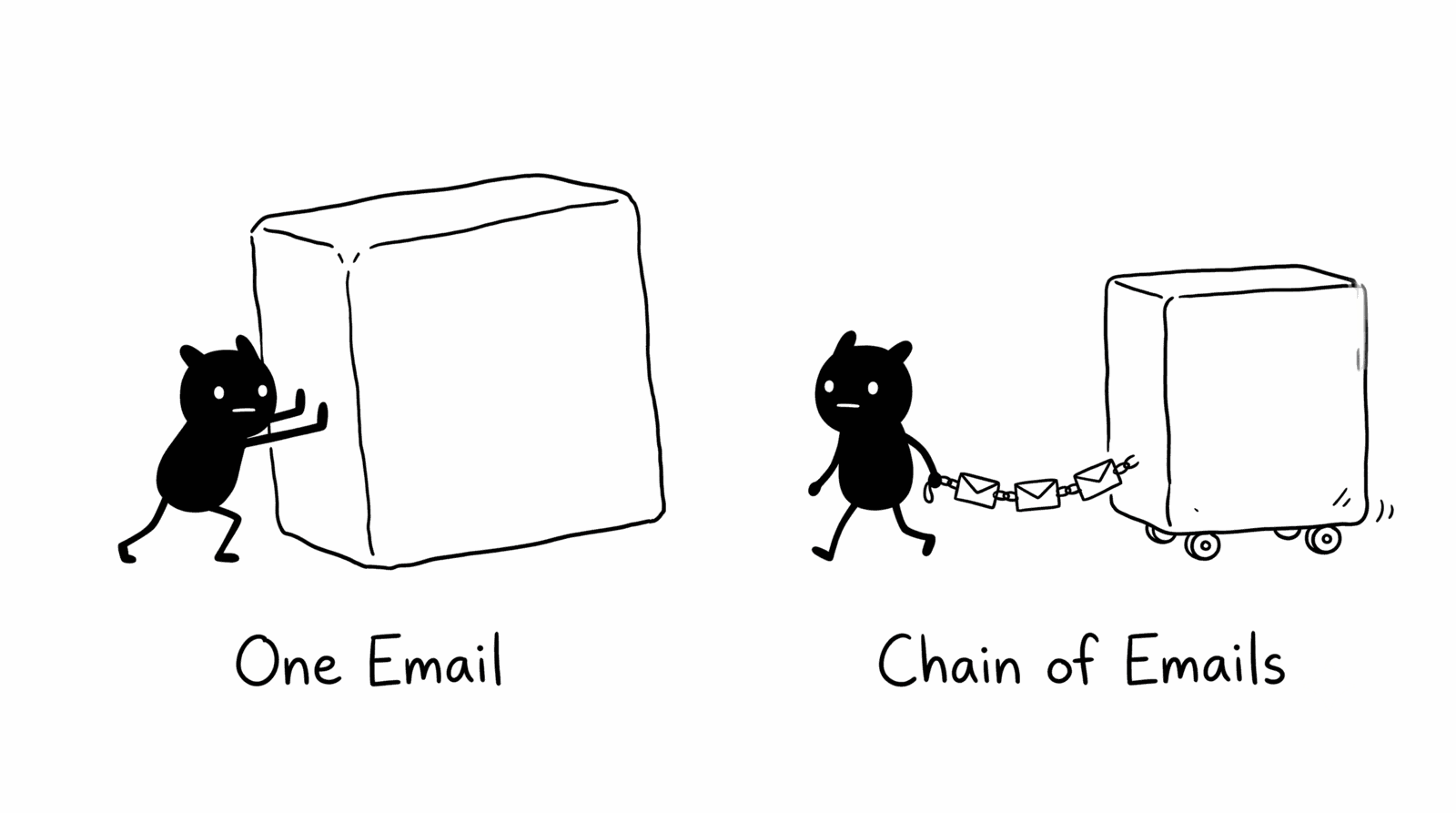
No. The expectation is dead: that one email should close a six-figure deal by itself. B2B email underperforms when marketers grade it against a job it was never built for, closing a multi-stakeholder purchase in a single message with no other channel in the room.
That expectation gap causes almost every “email is dead” post you’ll read this year, not inbox fatigue. The data backs the channel. Median B2B email marketing ROI still lands north of $36 for every $1 spent. Open rates across B2B sending have held roughly flat for three years. What climbed is marketers’ expectations of what one email should accomplish.
Why does B2B email underperform when it does?
Three failures explain most underperforming B2B programs, and you caused all three.
You asked email to close deals it can’t close alone. A single message can’t walk a buying committee of six or seven stakeholders through a purchase that reshapes their operating model. Treat one email like a closer instead of a connector and you’re testing it against a job it never had.
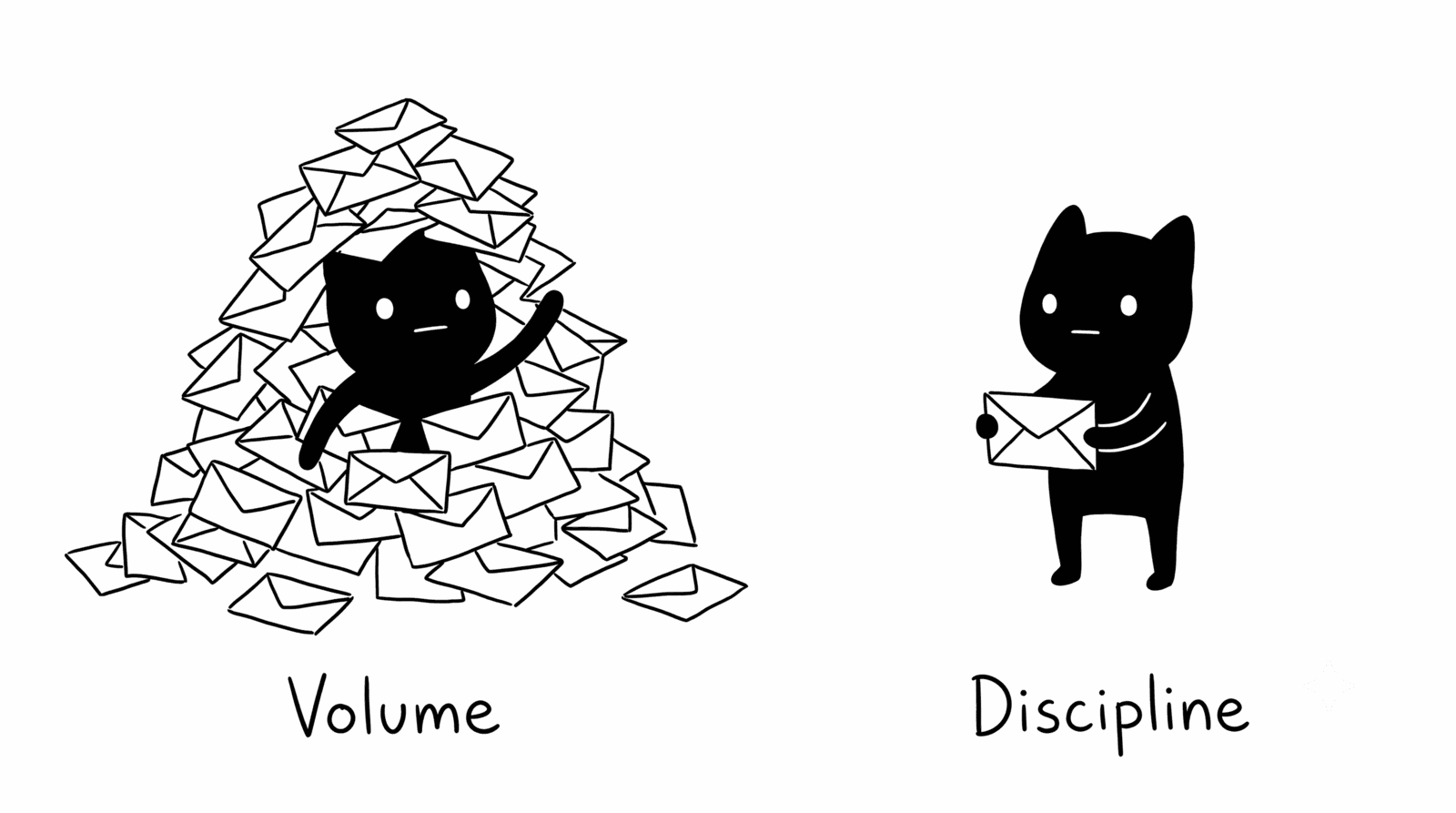
Volume replaced discipline. List size and send frequency became your proxy for effectiveness, so engagement dropped to match. Your database triples; relevance doesn’t triple with it. The inbox takes the blame for a decision you made in the send-frequency settings.
Vanity metrics buried the real signal. Open rate and click rate look like health indicators. They’re activity indicators. An eight-tool martech stack can report record engagement the same quarter pipeline contribution goes flat, because none of those tools measure whether the email moved a buyer closer to a decision.
What is email actually for in a B2B funnel?
Connective tissue. Its job is linking the higher-value moments in a buying journey that would otherwise sit isolated: a webinar someone attended three weeks ago, a case study a champion forwarded internally, a sales call that ended with “let me think about it.” Nothing else in your stack does that linking work as cheaply.
Used this way, email amplifies your thought leadership instead of competing with it. It extends a rep’s outreach instead of duplicating it. It keeps a campaign’s separate touchpoints legible as one story instead of six disconnected impressions. Judge your program against that job and most “underperforming” B2B email is doing exactly what it was built for. You’re just scoring the wrong outcome.
| What teams measure email against | What email actually does |
|---|---|
| Deal closed from this send | Buyer recalls this idea three touches later |
| Reply rate on a cold blast | Trust compounding across a multi-week sequence |
| Click-through as the success metric | A stakeholder forwards the message internally |
| One-email attribution | Shared credit across the full touchpoint chain |
How do you fix a B2B email program without a rebuild?
You strip it back. The fastest fix is subtraction, not a new platform, an AI layer, or a personalization engine. Three moves cover most cases.
Re-scope the goal per email. Before you write the subject line, decide what this specific email is allowed to accomplish: reinforce an idea, surface an offer, or hand off to sales. Try to do all three and you’ll do none of them well.
Cut send frequency until engagement stabilizes, then hold the line. Most programs over-send by two to three times the frequency their list can absorb. Cut volume and the metrics that decayed because of it usually recover.
Replace vanity metrics with a downstream check. Track whether people who opened this email show up further along in the next 30 days. A call booked, a case study viewed, a second email opened. Nothing moves downstream, the send didn’t work, no matter what the open rate says.
Why does over-personalized email backfire?
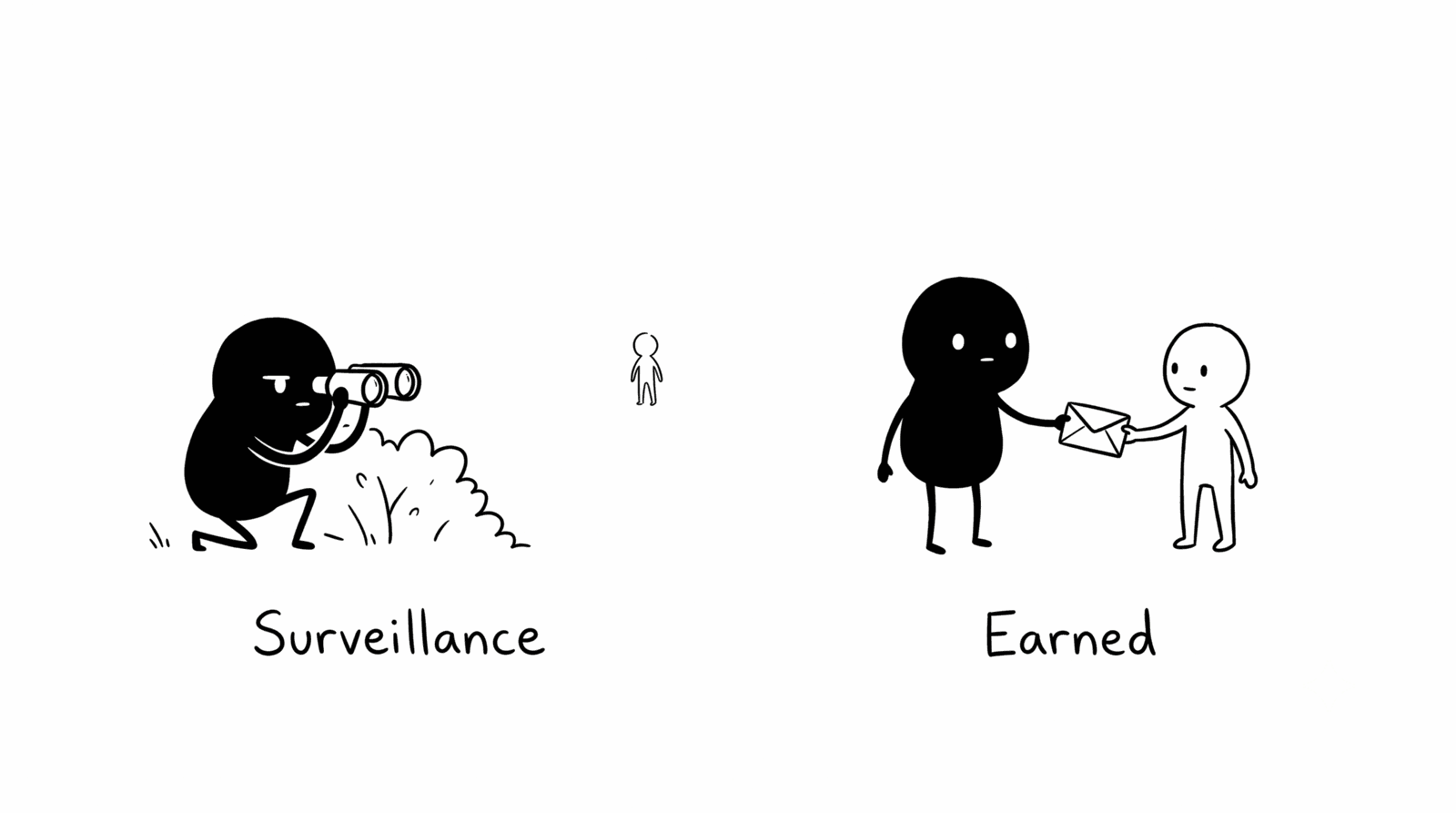
Because your buyer can tell the difference between relevance and surveillance. The second one erases whatever trust the first one built. An email that proves you scraped a prospect’s LinkedIn for their dog’s name doesn’t read as thoughtful. It reads as a warning sign. Once a recipient feels watched instead of understood, nothing else in that message gets a fair read.
Don’t cut personalization. Change what it’s built from. Use information the recipient expects you to have: their role, their stage in the buying journey, the content they engaged with. Skip the information you had to dig for. Earned personalization keeps a reader in the message. Exposed personalization gets them reaching for delete.
What actually makes an email feel personal, if not data volume?
Three inputs. Depth beats breadth on each one.
Stage. Send the message that matches where your buyer actually is: early research, active evaluation, or post-purchase. Not the message your automation platform defaulted to. Get the stage wrong and the email reads as generic even when every token in it is correctly populated.
Context. Reference the specific problem this recipient is living with right now, not a category-level pain point pulled from a persona template. Context separates “we solve this” from “we solve what you’re dealing with.”
Value. Answer “what’s in this for me” inside the first two sentences or lose the reader for good. You can’t recover a slow start further down the message. Value decides whether the email gets read or archived on sight.
What should B2B marketers do differently starting now?
Stop scoring email against a standard it can’t hit alone. Score it against the standard it was built for: does this message move a buyer through the journey, and does it hold the campaign’s touchpoints together as one story? Cut the send volume that’s outrunning your list’s tolerance. Swap the personalization tactics that require surveillance-grade research for the three inputs that don’t: stage, context, value.
Teams that win the next decade of B2B email won’t send the most messages or run the deepest personalization stack. They’ll run fewer emails, each one doing one job, and let the channel connect the campaign instead of carrying it alone.
FAQ
Is B2B email marketing still effective in 2026?
Yes. B2B email remains one of the highest-ROI channels marketing teams run. Most teams measuring it wrong grade single sends against closed-deal outcomes instead of its actual job: reinforcing and connecting other touchpoints across a longer buying journey.
Why do B2B email open rates decline over time?
Send volume outpaces list relevance. The same database receives more messages without a matching rise in message-to-recipient fit. Cut frequency and tighten segmentation, and open rate usually recovers faster than any subject-line or send-time change delivers.
What’s the difference between good and bad email personalization?
Good personalization uses information a recipient expects you to have (role, buying stage, content they engaged with) and applies it with restraint. Bad personalization surfaces information a recipient didn’t expect you to find. It signals surveillance instead of relevance and damages trust no matter how accurate the detail is.